- Unfair Dismissal: You must submit the form within 30 days of the date you were fired.
- Unfair Labour Practices: You must submit the form within 90 days of the incident. (Note: If you miss the deadline, you will have to apply for “condonation,” which means begging the CCMA for special permission to accept a late form—and it is not always granted.)
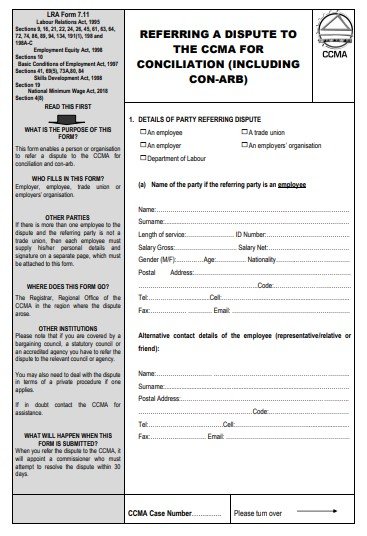
How to Fill Out the Form: Section by Section
Before you start writing, gather your employment contract, payslips, and any termination letters so you have accurate facts in front of you.
CCMA 7.11 Form PDF
- 1. Your Details & Your Employer’s Details: Be highly accurate here. Provide your full legal name, ID number, and contact info. For your employer, use their official registered company name and correct address. If you spell the company name wrong, it can legally stall your case.
- 2. The Nature of the Dispute: This is the most important box. Keep it brief, factual, and leave out the high emotion. Simply state what happened and when. (Example: “I was unfairly dismissed without a disciplinary hearing on October 12th.”)
- 3. The Outcome Required: What do you actually want the CCMA to do for you? Be specific. Do you want your job back (reinstatement)? Do you want compensation for the unfair firing? Do you just want your unpaid wages handed over?
- 4. Previous Steps: Note whether you tried to fix this internally first (like filing a formal grievance with HR).
- 5. Sign and Date: An unsigned form is an invalid form. Always sign it before sending.
How to Submit It
You can submit the form via email, fax, or by physically dropping it off at a CCMA office. Always keep a receipt or proof of submission (like a sent email timestamp or a fax confirmation page) to prove you beat the deadline.
What Happens Next?
Once the CCMA accepts your form, they will give you a case number and invite both you and your employer to a Conciliation. This is an informal, private meeting where a CCMA commissioner tries to help both sides talk it out and reach an agreement.
If your employer refuses to settle during Conciliation, the case moves to Arbitration, which is a formal, court-like hearing where the commissioner will make a final, legally binding decision.