Cognitive Distortions (PDF): Meaning, List, and 15 Examples Explained, Cognitive distortions are biased patterns of thinking that negatively influence how situations are interpreted. These mental filters often exaggerate problems, create unnecessary stress, and lead to unhelpful emotional responses. Understanding and identifying these distortions is a crucial step toward improving mental clarity, emotional balance, and decision-making.
A well-structured cognitive distortions PDF can serve as a practical reference tool, helping individuals recognize these patterns and replace them with healthier, more realistic thoughts. Whether used for self-improvement, therapy, or education, this resource simplifies complex psychological concepts into actionable insights.
What Are Cognitive Distortions?
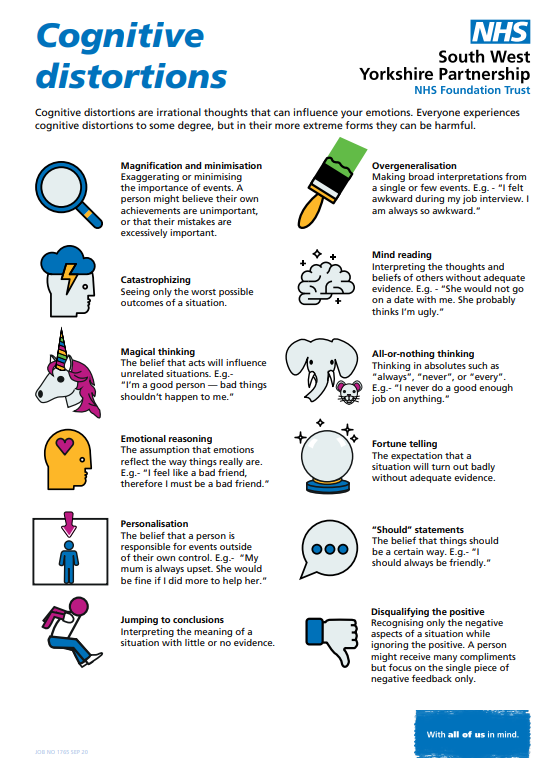
Cognitive distortions are irrational or exaggerated thought patterns that reinforce negative thinking. They often occur automatically and can shape beliefs about oneself, others, and the world.
These distortions are commonly addressed in cognitive behavioral techniques, where identifying and challenging them helps reduce anxiety, depression, and stress-related issues.
Why Cognitive Distortions Matter
Recognizing cognitive distortions allows individuals to:
- Improve emotional regulation
- Reduce overthinking and negative self-talk
- Strengthen problem-solving abilities
- Develop a more balanced and realistic perspective
A cognitive distortions list provides a structured way to identify these patterns and work toward healthier thinking habits.
15 Cognitive Distortions with Examples
Below is a clear breakdown of the most common distortions, including practical examples:
1. All-or-Nothing Thinking
Seeing situations in black-and-white categories.
Example: “If I don’t score 100%, I’m a complete failure.”
2. Overgeneralization
Drawing broad conclusions from a single event.
Example: “I failed once, so I’ll always fail.”
3. Mental Filter
Focusing only on the negative aspects.
Example: Ignoring praise and only remembering criticism.
4. Disqualifying the Positive
Rejecting positive experiences.
Example: “They only complimented me to be polite.”
5. Jumping to Conclusions
Making assumptions without evidence.
Example: “They didn’t reply, so they must be upset with me.”
6. Mind Reading
Assuming you know what others think.
Example: “Everyone thinks I’m incompetent.”
7. Fortune Telling
Predicting negative outcomes.
Example: “This presentation will definitely go badly.”
8. Catastrophizing
Expecting the worst-case scenario.
Example: “If I make a mistake, everything will fall apart.”
9. Emotional Reasoning
Believing feelings reflect reality.
Example: “I feel anxious, so something must be wrong.”
10. “Should” Statements
Placing rigid expectations on oneself or others.
Example: “I should always be perfect.”
11. Labeling
Assigning global negative labels.
Example: “I’m a loser.”
12. Personalization
Blaming oneself for external events.
Example: “It’s my fault the meeting went poorly.”
13. Blaming
Holding others responsible for your emotions.
Example: “They made me feel bad.”
14. Magnification and Minimization
Exaggerating negatives and minimizing positives.
Example: “My mistake is huge, but my success doesn’t matter.”
15. Control Fallacies
Believing you have total control or no control at all.
Example: “I am responsible for everyone’s happiness.”
These examples are often included in resources like “15 cognitive distortions mind my peelings” worksheets, which help visualize and challenge such patterns.
Practical Use of Cognitive Distortions PDF
A cognitive distortions PDF free download typically includes:
- A complete list of distortions
- Real-life examples for clarity
- Worksheets for self-reflection
- Techniques to reframe negative thoughts
Such materials are widely used by students, educators, therapists, and individuals seeking personal growth.
How to Overcome Cognitive Distortions
Developing awareness is the first step. Once identified, these distortions can be challenged through:
- Questioning the evidence behind thoughts
- Replacing extreme statements with balanced ones
- Practicing mindfulness and self-reflection
- Writing down thoughts and reframing them logically
Consistent practice leads to more rational thinking and emotional resilience.
Cognitive distortions shape perception in subtle yet powerful ways. Recognizing these patterns and actively working to correct them can transform mental well-being and daily decision-making. A structured cognitive distortions PDF serves as a valuable guide, offering clarity, examples, and practical exercises for long-term improvement.
FAQs
1. What is a cognitive distortions PDF?
A cognitive distortions PDF is a downloadable resource that lists common distorted thinking patterns along with explanations and examples for easy understanding.
2. How many cognitive distortions are there?
There are several types, but the most commonly referenced list includes 15 core cognitive distortions.
3. Can cognitive distortions be changed?
Yes, with awareness and practice, these thought patterns can be identified and replaced with healthier thinking.
4. Who can use cognitive distortions worksheets?
Students, teachers, therapists, and anyone interested in improving mental clarity can use them.
5. Are cognitive distortions linked to anxiety and stress?
Yes, they often contribute to anxiety, stress, and negative emotional states.