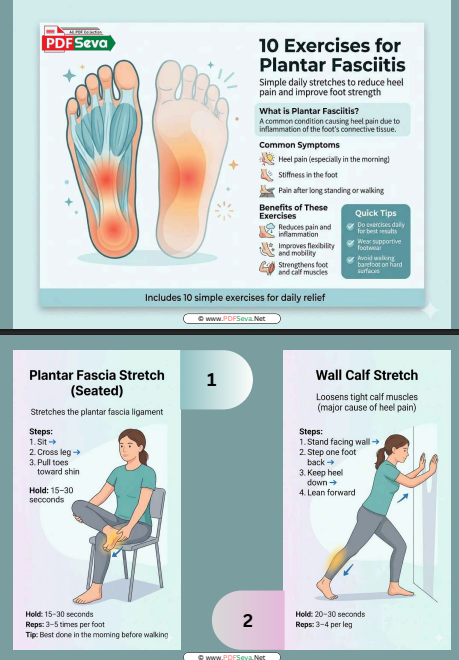
here you will find 10 Exercises for Plantar Fasciitis (Printable Copy, PDF Free Download) – Heel pain can quietly disrupt everyday life—especially the sharp discomfort that appears with the first steps in the morning. One of the most common causes is Plantar Fasciitis, a condition linked to inflammation of the thick band of tissue that supports the arch of the foot. Targeted exercises remain one of the most effective, non-invasive ways to reduce pain and restore normal movement.
This complete set of exercises focuses on stretching tight structures, strengthening weak muscles, and improving overall foot mechanics. The routine is suitable for daily use and can be adapted for beginners or those recovering from chronic symptoms.
What Causes Plantar Fasciitis?
The plantar fascia absorbs stress during walking and standing. Repeated strain leads to micro-tears and irritation. The condition is often associated with:
- Tight calf muscles
- Prolonged standing or walking on hard surfaces
- Poor footwear support
- Sudden increase in physical activity
- Flat feet or high arches
Addressing these factors alongside exercise produces the best results.
10 Exercises for Plantar Fasciitis
1. Plantar Fascia Stretch (Seated)
This is one of the most direct ways to target the affected tissue.
Sit comfortably, cross one leg over the other, and gently pull the toes toward the shin. A stretch should be felt along the arch. Hold for 15–30 seconds and repeat several times. Morning practice is especially effective for reducing first-step pain.
2. Wall Calf Stretch
Tight calf muscles increase strain on the heel.
Stand facing a wall, step one foot back, and keep the heel flat. Lean forward until a stretch is felt in the calf. Hold for 20–30 seconds and repeat on both sides.
3. Towel Stretch
This stretch improves flexibility in both the arch and calf.
Sit with legs extended, wrap a towel around the ball of the foot, and gently pull toward the body while keeping the knee straight. Maintain the stretch for 20–30 seconds.
4. Foot Roll (Massage Exercise)
A simple technique that combines stretching with self-massage.
Roll the foot over a tennis ball or water bottle, applying gentle pressure. A cold bottle can help reduce inflammation. Continue for 2–5 minutes.
5. Towel Curls
Strengthening the small muscles of the foot improves arch support.
Place a towel on the floor and use the toes to scrunch it toward the body. Perform 10–15 repetitions.
6. Marble Pickup
This exercise enhances coordination and toe strength.
Pick up small objects like marbles using the toes and place them into a container. Repeat for 10–20 repetitions.
7. Heel Raises
Strong calf muscles reduce the load on the plantar fascia.
Stand upright and slowly raise the heels off the ground, then lower them back down. Perform 10–15 repetitions for 2–3 sets.
8. Achilles Tendon Stretch
The Achilles tendon plays a key role in foot mechanics.
Stand in a staggered position, bend the back knee slightly, and lean forward. This variation targets deeper structures compared to a standard calf stretch. Hold for 20–30 seconds.
9. Toe Extension Stretch
This movement directly improves flexibility in the arch.
Place the toes against a wall while keeping the heel grounded. Lean forward gently and hold the stretch for 15–20 seconds.
10. Single-Leg Balance
Balance training builds stability and prevents recurrence.
Stand on one foot and maintain balance for 20–30 seconds. Repeat on both sides.
How Often Should These Exercises Be Done?
Consistency matters more than intensity. Most people benefit from:
- Daily practice, especially in the morning and evening
- Gentle stretching before activity
- Strength exercises at least 4–5 times per week
Progress may be gradual, but regular practice often leads to noticeable improvement within a few weeks.
Key Tips for Faster Recovery
- Wear supportive footwear with proper arch support
- Avoid walking barefoot on hard floors
- Limit high-impact activities during flare-ups
- Use ice therapy after long periods of standing
- Maintain a healthy body weight to reduce pressure on the feet
Printable Copy and PDF Free Download
A structured printable version makes it easier to follow the routine consistently. A well-designed printable copy allows quick reference at home, in classrooms, or in physiotherapy settings. The exercises can be organized across one or two pages for easy daily tracking and repetition.
When to Seek Medical Advice
If pain persists despite regular exercise, professional evaluation may be necessary. Severe or long-lasting symptoms can sometimes require additional treatments such as orthotics, physiotherapy, or medical intervention.
Conclusion
Relief from plantar fasciitis does not rely on rest alone. A combination of targeted stretching, strengthening, and daily care creates the most reliable path to recovery. These ten exercises address the root causes of heel pain and help restore comfort, mobility, and confidence in every step.