Vakalatnama Form PDF is a legally recognized document used in Indian Courts to authorize an advocate to act, appear, plead, file documents, sign petitions, take legal actions, withdraw cases and represent the client before courts.
including lines such as:
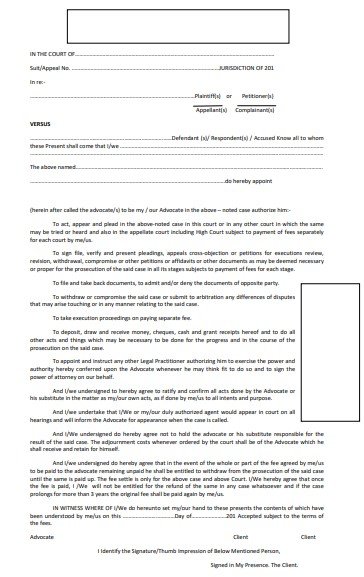
- “IN THE COURT OF …………………………”
- “I/We do hereby appoint ……………………. (hereinafter called the advocate/s)”
- “To act, appear and plead in the above-noted case”
- “To sign, file, verify and present pleadings, appeals, cross-objections”
- “To withdraw or compromise the said case”
- “I/We do hereby agree not to hold the advocate responsible for the result of the case”
What is a Vakalatnama?
A Vakalatnama is a written document through which a client (Plaintiff, Defendant, Petitioner, Respondent, Appellant, Complainant or Accused) authorizes a lawyer to represent them in a court of law.
its clearly begins with:
“IN THE COURT OF ………………………………………”
This indicates that the Vakalatnama can be filed in any court—Civil Court, Criminal Court, District Court, High Court, or any other judicial authority.
It includes fields such as:
- Suit/Appeal No.
- Jurisdiction
- Name of Plaintiff/Petitioner/Appellant
- Name of Defendant/Respondent/Accused
Structure of the Vakalatnama Form
The Vakalatnama Form includes the following key sections:
- Court Details – “In the Court of…”, Suit/Appeal Number, Jurisdiction.
- Party Information – Names of Plaintiff/Petitioner/Appellant and Defendant/Respondent/Accused.
- Advocate Appointment Clause – Client authorizes the advocate to act in the case.
- Powers Given to Advocate – To appear, plead, sign, file documents, withdraw/compromise case, admit or deny documents, receive/deposit money, and appoint another lawyer.
- Fee & Responsibility Terms – No refund, fresh fee after 3 years, advocate not liable for case result.
- Signatures Section – Client, Advocate, and Witness/Identifier signatures with verification.
This form empowers the advocate to act, appear and plead in court, sign and file pleadings, appeals, revisions, compromise petitions, admit/deny documents, withdraw cases, receive or deposit money, and even appoint another legal practitioner if required.