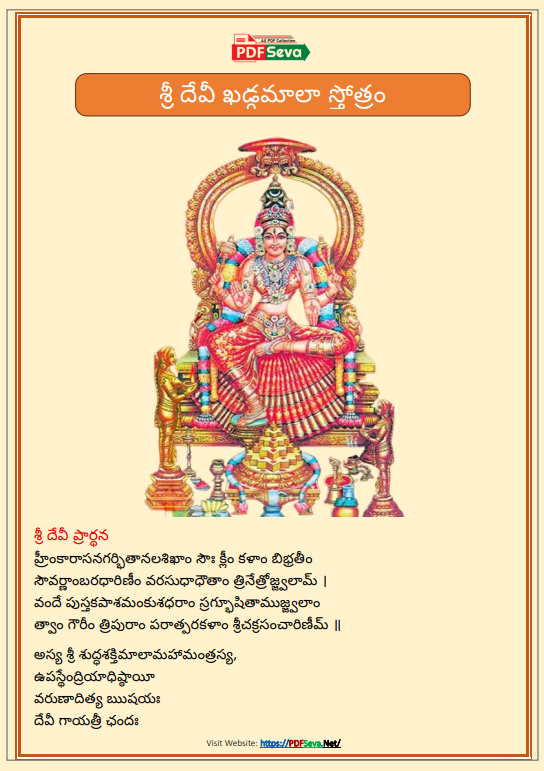
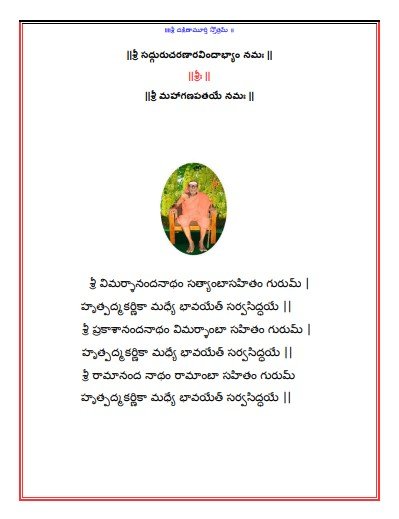
“Dakshinamurthy Stotram” is one of the most sacred hymns dedicated to Lord Dakshinamurthy, the divine form of Lord Shiva who appears as the Adi Guru (the primordial teacher).
In Vedic tradition, Lord Dakshinamurthy is worshipped as the God of knowledge, wisdom, spiritual awakening, and ultimate truth. The stotram, originally composed by Adi Shankaracharya, holds deep metaphysical concepts and reveals the truth of the Self (Atma Tattvam).
What Is Dakshinamurthy Stotram Telugu pdf ?
Dakshinamurthy Stotram is a powerful hymn that praises Lord Dakshinamurthy as:
- The embodiment of ज्ञान (Jnana – Knowledge)
- The dispeller of अज्ञान (Ajnana – Ignorance)
- The silent teacher who imparts wisdom through divine silence
- The seated guru under the banyan tree (వటవృక్షం)
- The one who reveals the illusion of the world and the truth of the Self
Why Recite Dakshinamurthy Stotram?
According to your PDF content and the interpretation of Adi Shankaracharya’s philosophy, reciting Dakshinamurthy Stotram helps:
1. Remove ignorance (అజ్ఞానం తొలగిస్తుంది)
It destroys misconceptions about life, body, mind, and the external world.
2. Improve concentration & intelligence
Students, meditators, and spiritual seekers chant it to gain clarity.
3. Bring peace and stability
Verses like “మాయామాయావివ విజృంభయతే” explain how illusions are removed.
4. Deepen spiritual understanding
The hymn teaches Advaita philosophy in poetic form.
5. Invoke blessings of Adi Guru Shiva
Verse-by-Verse Explanation
Verse 1: “మౌనవ్యాఖ్యా…”
- One who teaches through silence (మౌనం)
- Sitting beneath a banyan tree (వటవృక్షం)
- Surrounded by great sages who learn without words
- Whose face radiates pure bliss (ఆనందరూపం)
Meaning:
True knowledge cannot always be expressed in words. The highest wisdom is transferred through divine silence. Lord Dakshinamurthy sits peacefully, revealing the truth of absolute consciousness.
Verse 2: “విశ్వం దర్పణదృశ్యమాన నగరీ…”
- The world appears like a reflection in a mirror
- Maya (illusion) projects diversity
- The Self remains unchanged
- Lord Dakshinamurthy helps seekers understand this truth
Meaning:
All forms, names, and experiences are reflections of one underlying reality. The Guru reveals this during meditation.
Verse 3: “బీజస్యాంతర్వాంకురం…”
- The universe emerges like a tree from a tiny seed
- Everything manifests through Maya
- Dakshinamurthy destroys spiritual fear
Meaning:
Just as a seed contains an entire tree in potential form, the universe is hidden within consciousness.
Verse 4: “యస్యైవ స్పురణం…”
- Knowledge arises when the mind awakens
- The Self is revealed by the Guru
- Ignorance fades like darkness before light
Meaning:
The Guru’s grace makes a disciple recognize the pure Self.
Verse 5: “నానాచిచ్ఛద్రఘటో…”
Contains phrases like:
- “ఘటతొదరసిర్థత”
- “జ్ఞానంయత్తదేకం”
Meaning:
Just like many pots hold reflections of one sun, many bodies appear to hold consciousness, but the consciousness itself is one.
Verse 6 to 10: Illusion & Enlightenment
- Dream-like nature of the world
- The play of Maya
- The misunderstanding caused by sense organs
- The awakening to the inner Self
- Lord Dakshinamurthy as the destroyer of delusion
Verse 11: “వటవిటపి సమీపే…”
This beautifully describes:
- Lord Dakshinamurthy sitting under a banyan tree
- Sages seated before Him
- Teaching the truth of “Aham Brahmasmi”
- Ending the cycle of birth and death
Additional Verses (12–17)
- “చిత్తనం వటతరూధ్మల…”
- “నిధయే సర్వవిదానాం…”
- “ఓం నమః ప్రణవరూపాయ…”
These are not in the classical 10, but popular in temple recitations.
They praise Dakshinamurthy as:
- The embodiment of Pranava (Om)
- The healer of worldly sorrows (భవరోగ భిషజ్)
- The giver of liberation
- The one seated as pure consciousness (చిదఘన స్వరూపం)