100 Safety Topics for Daily Toolbox Talk PDF Free Download: Workplace safety depends on consistent communication, and daily toolbox talks are one of the most effective ways to reinforce safe practices. A 100 Safety Topics for Daily Toolbox Talk free resource provides a ready-to-use collection of short, practical safety discussions that help teams stay aware, compliant, and proactive on the job.
These topics are designed to be simple, direct, and actionable. Whether used on construction sites, warehouses, or industrial workplaces, they support daily safety briefings without requiring extensive preparation.
What Are Toolbox Talk Safety Topics?
Toolbox talks are short safety meetings conducted before starting work. Each session focuses on a specific topic related to workplace hazards, safety procedures, or best practices.
A collection like 100 Safety Topics for Daily Toolbox Talk pdf free download typically includes a wide range of subjects, such as:
- Personal protective equipment (PPE)
- Fall protection
- Electrical safety
- Fire prevention
- Manual handling and lifting techniques
- Hazard communication
- Workplace housekeeping
These topics are structured in a way that allows supervisors to deliver quick, impactful messages within 5–10 minutes.
Daily toolbox talks are short safety meetings conducted before work begins. These discussions help workers stay alert, reduce risks, and maintain a strong safety culture on-site. Regular toolbox talks can significantly reduce accidents by increasing awareness and encouraging safe practices.
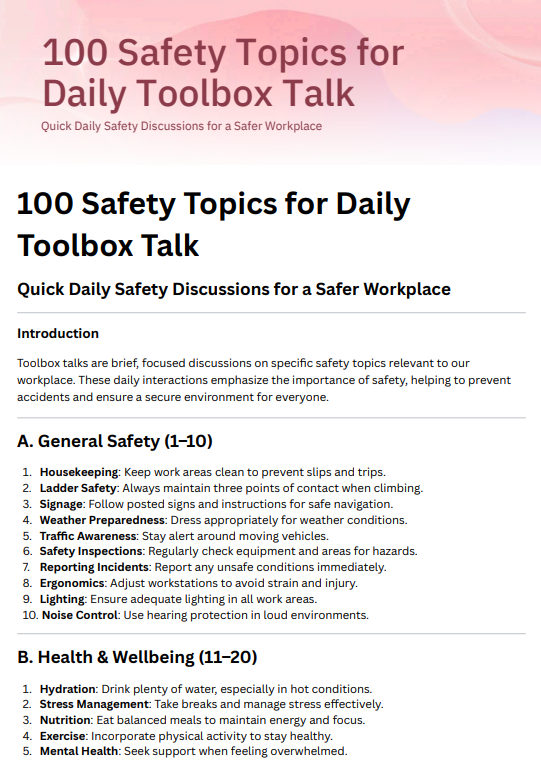
Below is a comprehensive list of 100 safety topics you can use for daily toolbox talks.
Why Daily Toolbox Talks Are Important
Toolbox talks help teams:
- Identify workplace hazards
- Prevent accidents and injuries
- Improve communication among workers
- Promote a proactive safety culture
- Ensure compliance with safety procedures
Even a 5–10 minute discussion can make a big difference in preventing workplace incidents.
100 Safety Topics for Toolbox Talks
A. General Safety Topics (1–20)
- Accident prevention
- Accident reporting procedures
- Hazard identification
- Risk assessment basics
- Workplace safety rules
- Safety culture awareness
- Near-miss reporting
- Personal responsibility for safety
- Workplace inspections
- Safety signs and symbols
- Emergency contacts awareness
- Housekeeping and cleanliness
- Workplace communication
- Job safety analysis (JSA)
- Safety audits
- Behavioral safety
- Human error and prevention
- Workplace complacency
- Zero harm concept
- Cost of accidents
B. Health & Wellbeing Topics (21–35)
- Fatigue management
- Mental health awareness
- Stress management
- Alcohol and drug awareness
- Personal hygiene
- Heat stress prevention
- Cold weather safety
- Hydration importance
- Diabetes awareness at work
- Workplace ergonomics
- Repetitive strain injuries
- Eye strain prevention
- Nutrition for workers
- Fitness for duty
- Presenteeism (working while sick)
C. PPE & Personal Safety (36–45)
- Personal Protective Equipment (PPE)
- Proper use of safety helmets
- Eye protection safety
- Hearing protection
- Hand protection (gloves)
- Foot protection
- Respiratory protection
- High-visibility clothing
- PPE inspection and maintenance
- Limitations of PPE
D. Fire & Emergency Safety (46–55)
- Fire prevention
- Fire extinguisher use
- Emergency evacuation procedures
- Emergency preparedness
- First aid basics
- CPR awareness
- Handling combustible materials
- Refueling safety
- Explosion hazards
- Disaster preparedness (earthquakes, floods)
E. Tools & Equipment Safety (56–65)
- Safe use of power tools
- Hand tool safety
- Machine guarding
- Equipment inspection
- Lockout/tagout procedures
- Electrical safety
- Working with generators
- Angle grinder safety
- Equipment maintenance
- Safe lifting equipment use
Power tools, for example, can cause serious injuries if not used correctly or without proper PPE and inspection.
F. Construction & Site Safety (66–80)
- Working at heights
- Ladder safety
- Scaffold safety
- Excavation safety
- Demolition safety
- Confined space entry
- Fall protection systems
- Roof work safety
- Site access and egress
- Road work safety
- Working near power lines
- Rebar and impalement hazards
- Building shafts and open holes
- Silica dust exposure
- Asbestos awareness
G. Environmental & Hazardous Materials (81–90)
- Air quality awareness
- Dust control
- Hazardous substances handling
- Chemical safety
- Lead exposure
- Inert gases safety
- Spill response
- Waste management
- Environmental protection
- Mould and mildew hazards
H. Workplace Behavior & Safety Awareness (91–100)
- Mind on safety (focus at work)
- Defensive driving
- Distracted working
- Protecting the public
- Bug and insect hazards
- Workplace violence prevention
- Communication during operations
- Safety leadership
- Training and competency
- Youth worker safety
Key Safety Topics Included
A well-structured toolbox talk list covers essential safety areas across different industries. Common examples include:
- Slips, trips, and falls prevention
- Safe use of ladders and scaffolding
- Lockout/tagout procedures
- Machine guarding
- Chemical handling safety
- Heat stress and cold weather precautions
- Emergency response planning
- Vehicle and equipment safety
Each topic focuses on real-world risks and encourages workers to identify hazards before they lead to incidents.
Why Daily Toolbox Talks Matter
Daily safety discussions are not just routine—they are critical for building a strong safety culture.
Improves Awareness:
Regular discussions keep safety top of mind for all workers.
Reduces Accidents:
Addressing hazards daily helps prevent injuries and near misses.
Ensures Compliance:
Frequent safety talks support OSHA and workplace safety standards in the United States.
Encourages Participation:
Short, focused talks allow workers to share concerns and experiences.
Practical Use in the Workplace
A 100 Safety Topics for Daily Toolbox Talk free resource is highly practical for supervisors, safety officers, and team leaders.
- Select one topic each day based on current work conditions
- Keep discussions brief and focused
- Use real examples from the job site
- Encourage worker interaction and questions
- Reinforce key safety rules and responsibilities
Consistency is more important than complexity. Even a short daily reminder can significantly improve workplace safety outcomes.
What’s Included in the PDF Resource
A typical 100 Safety Topics for Daily Toolbox Talk printable document includes:
- 100+ ready-to-use safety topics
- Short explanations for each topic
- Easy-to-read format for quick reference
- Printable layout for on-site use
- Suitable for multiple industries
This makes it an ideal tool for both small teams and large organizations.
A structured list of daily safety topics simplifies the process of conducting effective toolbox talks. By using a 100 Safety Topics for Daily Toolbox Talk pdf free download, organizations can ensure consistent safety communication, reduce workplace risks, and promote a culture where safety becomes a daily habit rather than a requirement.
FAQs
1. What is included in 100 Safety Topics for Daily Toolbox Talk PDF?
It includes a collection of short safety discussion topics covering common workplace hazards, safety procedures, and preventive measures.
2. How do you use toolbox talk topics effectively?
Choose one topic daily, keep the talk brief, relate it to current work conditions, and encourage team participation.
3. Are toolbox talks required in the United States?
While not always legally required, toolbox talks support OSHA compliance and are considered a best practice in workplace safety programs.
4. Can these safety topics be used for all industries?
Yes, most topics are general and adaptable for construction, manufacturing, warehousing, and other industries.
5. Where can I get 100 Safety Topics for Daily Toolbox Talk free?
Many safety platforms and training providers offer free downloadable PDFs and printable resources online.