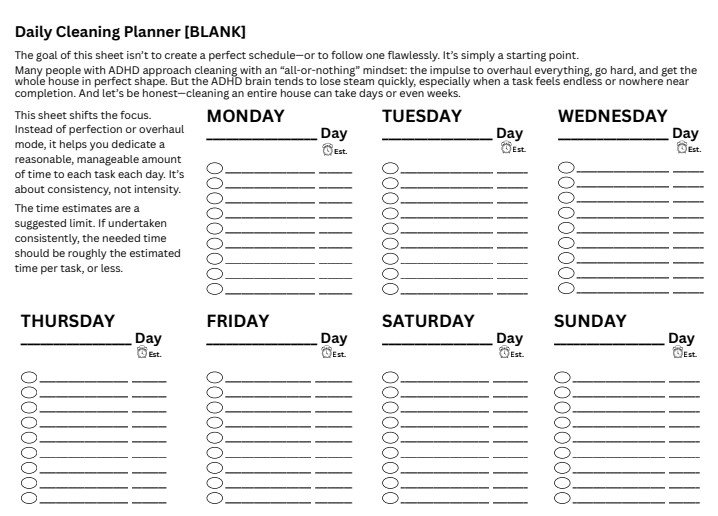
Daily Cleaning Planner – BLANK PDF Download here. Cleaning can feel incredibly overwhelming, especially if you have ADHD. Factors like executive dysfunction, getting easily distracted, and struggling to estimate how long tasks take (time blindness) can make standard cleaning routines feel impossible.
An ADHD-friendly cleaning planner is a tool designed to work with your brain instead of against it by keeping things simple, clear, and achievable.
What Makes It Different?
Traditional planners often just list massive, vague chores like “Clean the house.” An ADHD planner focuses on reducing your mental load by:
Daily Cleaning Planner – BLANK pdf
- Breaking Tasks Down: “Clean the house” becomes “Pick up clothes” and “Wipe the table.”
- Eliminating Decisions: You do not have to decide what to clean; you just look at the plan for the day.
- Encouraging Short Bursts: It relies on small daily habits rather than exhausting, all-day cleaning marathons.
The Core Features
A good ADHD cleaning system usually includes a few specific tools to keep you on track without causing burnout:
- The Brain Dump: A blank space to write down every random thought or task cluttering your mind so you can stop stressing about forgetting them.
- Daily Checklists: Small, fast tasks to keep the baseline tidy (like making the bed, washing dishes, or taking out the trash).
- Weekly Schedules: Assigning specific chores to specific days (e.g., Mondays are strictly for laundry, Tuesdays are strictly for bathrooms).
- Priority Focus: Highlighting the one or two tasks that absolutely must get done, ignoring the rest if you are low on energy.
A Sample Daily Routine
Here is an example of how to break up your day so you are not tackling everything at once:
| Time of Day | Quick Tasks |
|---|---|
| Morning | Make the bed, clear obvious clutter, and start a load of laundry. |
| Afternoon | Wash the dishes and wipe down the main surfaces. |
| Evening | Do a quick 10-minute tidy-up and set out what you need for the next morning. |
Tips for Success
- Use Timers: Set a timer for 10 or 15 minutes. Work until it goes off, and then take a break. This prevents exhaustion.
- The “One Room” Rule: Only focus on the space you are currently in. If you find an item that belongs in the bedroom, put it in a basket rather than walking to the bedroom and getting distracted in there.
- Add Music: Give your brain some background stimulation to make the chore more enjoyable.
- Combine with Visual Tools: Use physical sticky notes or a whiteboard where you can visibly see your progress.
- Forgive Yourself: Do not overload your list with too many tasks, and do not panic if you skip a day. Consistency matters much more than perfection.