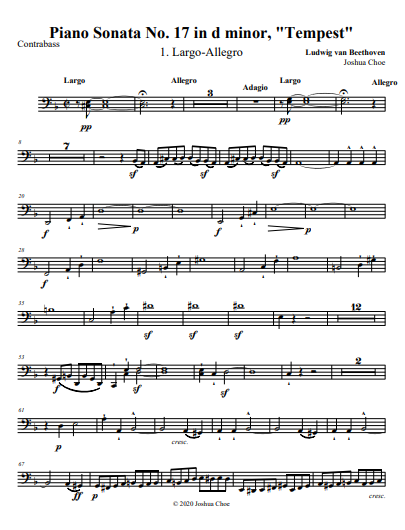
If you’re looking for the Tempest Sonata 1st Movement Sheet Music PDF, you’re in the right place. The first movement of Ludwig van Beethoven’s famous piano work—Piano Sonata No. 17 in D minor, Op. 31 No. 2—is one of the most dramatic and expressive pieces in classical piano repertoire. In this guide, you’ll find how to access the sheet music, understand the structure, and use it effectively for practice or teaching.
What is the Tempest Sonata 1st Movement?
The first movement, marked Largo – Allegro, opens with a mysterious, slow introduction followed by a sudden shift into a restless and stormy Allegro section. This contrast is what gives the sonata its nickname “Tempest.”
Quick answer (featured snippet style):
The Tempest Sonata 1st Movement Sheet Music refers to the opening movement of Beethoven’s Piano Sonata No. 17, featuring a dramatic Largo introduction and a fast Allegro section, widely studied by intermediate to advanced pianists.
Download Tempest Sonata 1st Movement Sheet Music PDF
You can access high-quality versions of the sheet music from trusted classical music sources like MuseScore and IMSLP.
The PDF you provided includes:
- Complete notation of the first movement
- Dynamic markings (p, f, cresc., dim.)
- Tempo indications (Largo → Allegro)
- Classical structure faithful to Beethoven’s original composition
This makes it suitable for:
- Piano students (intermediate to advanced)
- Music teachers creating lesson plans
- Performers preparing recitals or exams
Musical Structure & Key Features
Understanding the structure helps you play more musically—not just mechanically.
1. Largo Introduction
- Slow, expressive opening
- Uses broken chords and pauses
- Creates suspense and emotional depth
2. Allegro Section
- Fast tempo with continuous motion
- Features arpeggios and dramatic contrasts
- Strong left-hand accompaniment patterns
3. Dynamic Expression
- Frequent shifts between soft (piano) and loud (forte)
- Sudden pauses and accents
- Requires control and emotional interpretation
Difficulty Level & Who Should Learn It
The first movement is considered upper-intermediate to advanced level.
You should attempt this piece if you:
- Can manage hand independence
- Are comfortable with arpeggios and fast passages
- Want to improve expressive playing
For beginners, it may feel overwhelming due to:
- Tempo changes
- Complex phrasing
- Emotional interpretation demands
Practice Tips for Students
To master the Tempest Sonata 1st Movement:
Start with the Largo section slowly. Focus on expression rather than speed.
Break the Allegro into small sections and practice hands separately.
Use a metronome to gradually increase tempo.
Pay attention to dynamics—this piece is all about contrast.
Consistency matters more than speed when learning Beethoven.
Why This Piece is So Popular
This sonata remains one of Beethoven’s most studied works because:
- It bridges Classical and Romantic styles
- It tells a dramatic musical “story”
- It develops both technical and expressive skills
Many piano exams and performances include this piece due to its depth and challenge.
SEO FAQ Section (with Schema Markup)
Frequently Asked Questions
Q1. Is the Tempest Sonata 1st Movement difficult?
Yes, it is considered intermediate to advanced due to its fast passages, dynamic control, and expressive demands.
Q2. Can beginners play Beethoven Tempest Sonata?
Beginners may find it challenging. It is better suited for students with solid piano fundamentals.
Q3. What key is the Tempest Sonata 1st Movement in?
It is in D minor, which contributes to its dramatic and intense mood.
Q4. Where can I download Tempest Sonata sheet music PDF?
You can download it from platforms like MuseScore and IMSLP, which offer free and public domain versions.
Q5. How long does it take to learn this piece?
Depending on skill level, it can take several weeks to a few months of consistent practice.